Veterinary AI SOAP Notes: Smarter Medical Records Inside Your PIMS
AI SOAP notes help veterinary clinics create clearer records inside the PIMS, reducing copy-paste work, improving handovers, and keeping documentation connected to the next step in care.
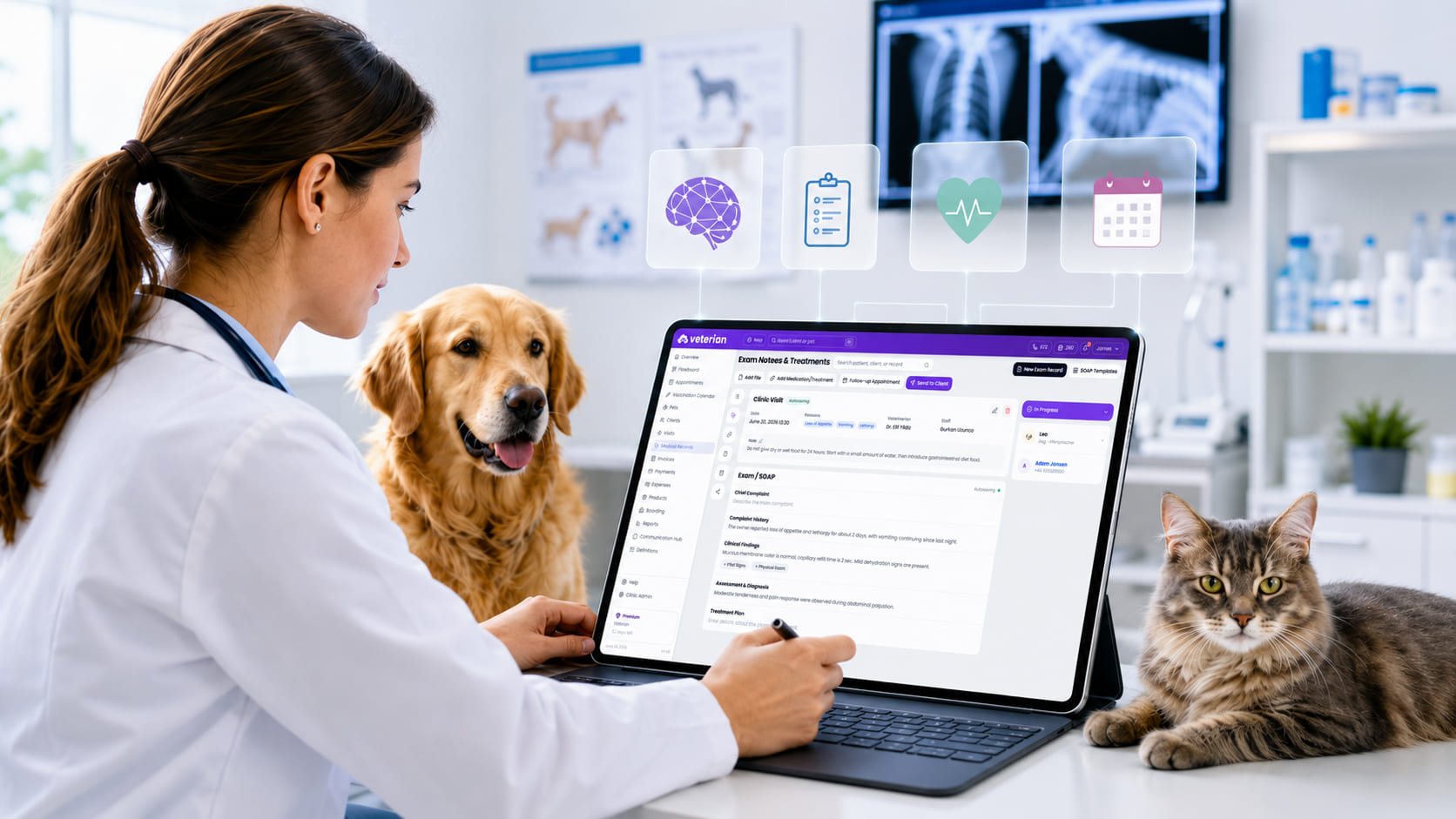
Veterinary documentation has a strange way of becoming urgent only after the clinical work is done.
The patient has been examined. The client has been reassured, warned, or given three options and a cost estimate. Medication has been dispensed. A recheck may have been discussed. The next appointment is already waiting. And somewhere in that narrow space between one case and the next, the veterinarian is expected to create a clear, defensible, useful record.
That gap is where many clinics lose time
AI SOAP notes are often described as a faster way to write clinical notes. That is true, but it is not the most interesting part. Text generation on its own is not enough. A polished note sitting outside the practice management system still has to be copied, pasted, checked, saved, and attached to the patient file.
The stronger argument is this: the future of veterinary AI is not another tab. It is AI inside the clinical workflow.
When SOAP documentation is created directly inside the veterinary PIMS, it becomes part of the consultation rather than an administrative task that happens later. The note is not floating in a separate scribe tool. It is connected to the appointment, the patient history, the clinician, the treatment plan, the invoice, the reminder, and the follow-up.
That connection is where the value starts.
SOAP notes are not the admin bit after medicine
SOAP documentation remains useful because it gives clinical thinking a shape. Subjective, Objective, Assessment, Plan. It is simple enough to use every day, but structured enough to make a future review possible.
In veterinary practice, that matters more than people sometimes admit.
A note that says “vomiting, injection given, monitor” might make sense to the person who wrote it thirty minutes ago. It is far less useful to the veterinarian seeing the same patient two days later, the nurse taking a follow-up call, or the manager reviewing why a client thought bloodwork had never been discussed.
Good veterinary records show what was reported, what was found, what was suspected, what was recommended, what was accepted or declined, and what should happen next.
That last part is easy to under-document. The follow-up instruction, the declined diagnostic, the medication warning, the “come back sooner if…” advice — these are often the details that matter when the case does not follow a neat path.
SOAP notes are not just evidence that a consultation happened. They are the handrail for the next clinical decision.
From rough notes to a usable clinical record
The practical value of AI-supported documentation is that it works with the way many veterinary consultations actually happen.
A vet may not have time to write a full note during the appointment. But they can dictate a short summary. A nurse may have already captured the weight, presenting complaint, appetite, medications, and owner concerns during intake. The veterinarian may add exam findings, assessment, treatment, and follow-up instructions after the client conversation.
A well-designed system can turn those inputs into a structured draft.
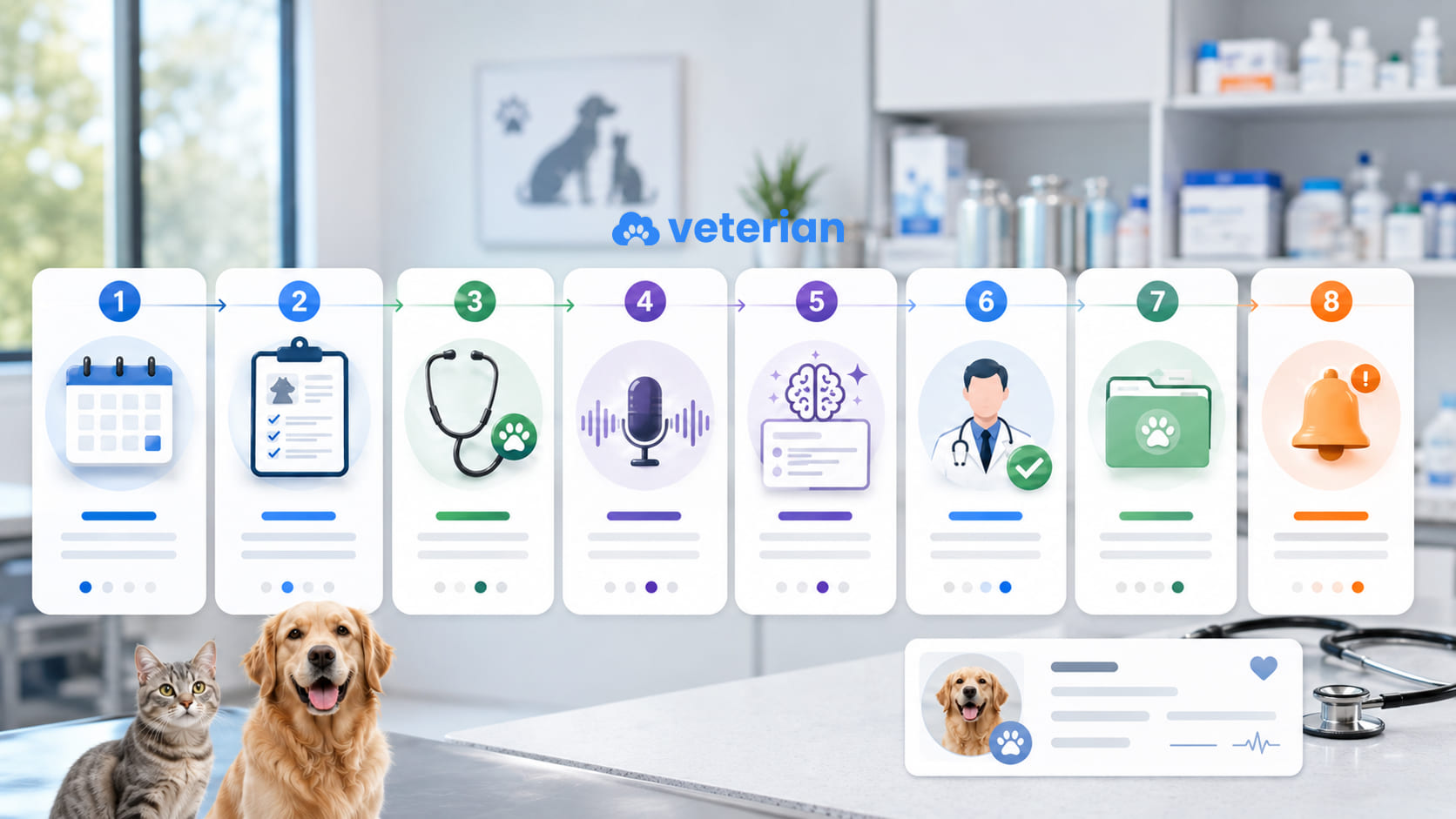
The workflow might look like this:
appointment → intake → consultation → voice or rough notes → AI SOAP draft → veterinarian review → saved record → reminders or follow-up tasks
A small detail matters here: the draft should open in the same consultation screen, beside the patient history and today’s charges, not in a detached workspace the team has to reconcile later.
Consider a common case: a dog presents with acute vomiting. The client reports two episodes overnight, no diarrhea, reduced appetite, and possible access to table scraps. On exam, the dog is bright, mildly dehydrated, with a comfortable abdomen. The vet recommends bloodwork, but the client chooses symptomatic treatment first. Medication is given, feeding advice is discussed, and the client is told to return if vomiting continues or if lethargy develops.
A weak record might capture only the injection and a vague “monitor” instruction.
A better SOAP note records the incomplete history, the exam findings, the declined bloodwork, the treatment plan, and the safety-netting advice. Not because it makes the note longer, but because it makes the next decision safer.
AI can help assemble that structure. The veterinarian still has to review it. Responsibility stays with the clinician.
Speed helps. Structure helps more.
Most clinics will notice the speed benefit first.
If a veterinarian can dictate a few points and review a draft instead of starting from a blank screen, notes are more likely to be finished before the end of the shift. That reduces the familiar backlog of half-written records and end-of-day memory work.
But faster notes are only part of the story.
The larger gain is more consistent documentation across the team. Every practice has variation. Some clinicians write beautifully detailed notes. Some are concise to the point of mystery. Locums bring their own abbreviations. New graduates may over-document the wrong parts and under-document the plan. Emergency shifts can leave behind entries that make sense only if you were there.
AI-assisted notes can reduce that variation by giving each record a reliable clinical frame.
Not identical notes. Not overfilled notes. Just records that consistently separate the history, examination, assessment, and plan — and make room for the decisions a clinic actually needs to track.
For example:
diagnostics recommended but declined;
recheck timing;
medication dose and duration;
discharge instructions;
owner concerns;
changes from a previous plan;
warnings given for deterioration;
who needs to call whom, and when.
These details are not decorative. They are instructions for the next person who touches the case.
Why another tab is the wrong answer
Standalone AI scribes can be impressive. Some produce clean, readable notes from a conversation or dictation. For an individual clinician, that may feel like progress.
For the clinic, it can still be fragmentation.
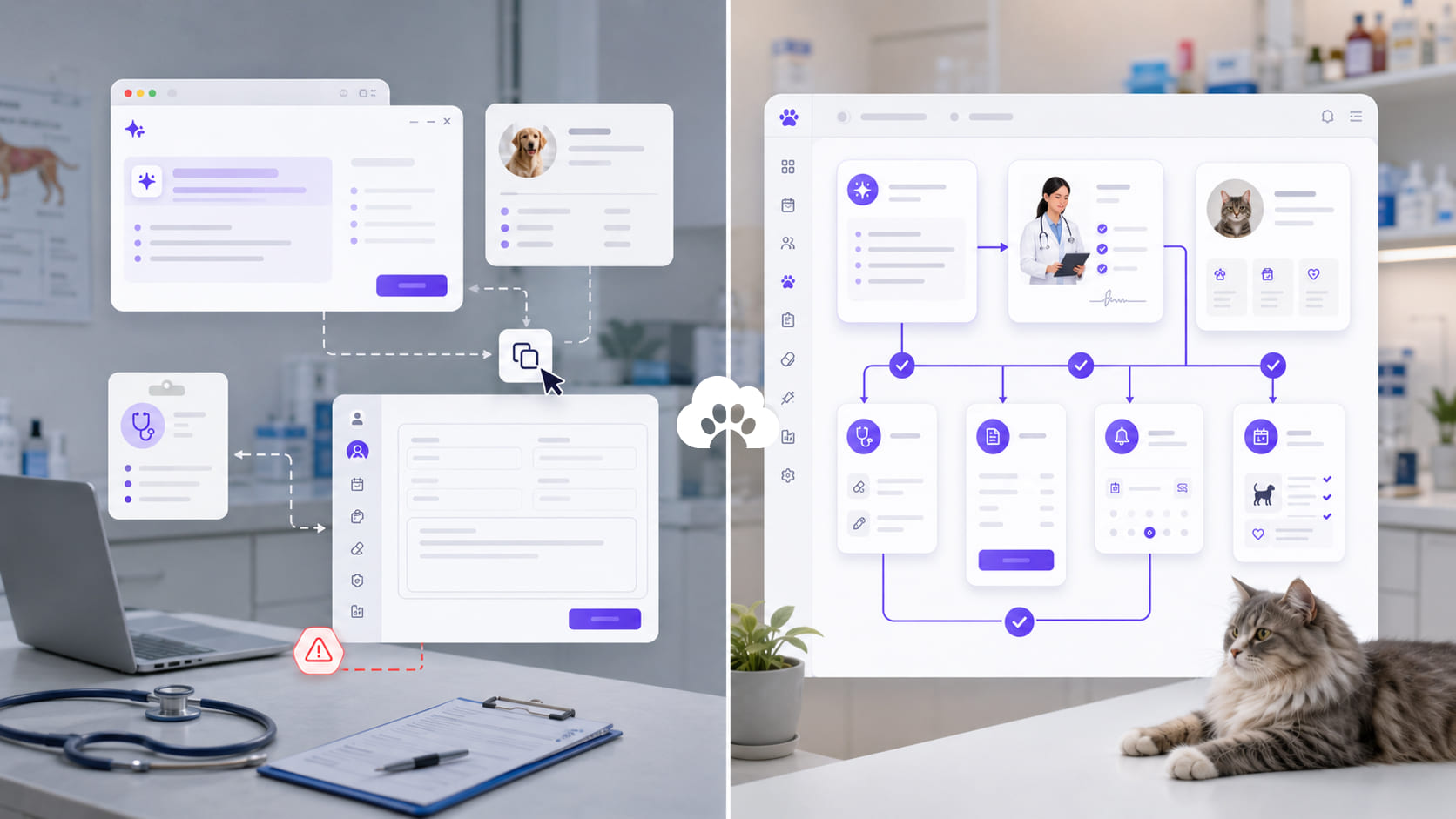
If the draft note lives outside the veterinary practice management software, the team has created another step in an already crowded day. Someone has to move the note into the correct patient record. Someone has to make sure the right version was saved. Someone has to check whether the plan created a reminder, whether the declined test is visible later, and whether the discharge advice matches what was billed or dispensed.
Copy and paste is not a workflow strategy.
It is a workaround.
The PIMS is already the operational center of the practice. It holds the appointment, client details, patient history, products, charges, diagnostics, reminders, certificates, estimates, and communication records. Clinical documentation belongs there too.
When SOAP drafting is built into that environment, the note can be part of the actual case flow. Intake notes recorded by a nurse can sit beside the veterinarian’s dictated findings. The final SOAP note can be reviewed and saved directly into the patient history. A recheck mentioned in the plan can become a task or reminder. Medication instructions can align with discharge notes. The next person opening the file can see what happened without searching across tools.
That is the difference between generating text and improving how the clinic works.
The patient history is only useful if people can read it quickly
Veterinary teams rarely have the luxury of reading a full patient history slowly.
Before a recheck, a veterinarian may have two minutes to understand what happened last time. A nurse preparing a chronic dermatology case needs to know which medication was changed, whether the owner was shown how to clean the ears, and when the next cytology was due. A receptionist taking a call may need to confirm whether a follow-up was recommended or only suggested if signs persisted.
The record has to be scannable.
Well-structured SOAP notes help because they put information where the team expects to find it. The assessment is not buried in a paragraph of owner history. The plan is not mixed into the physical exam. Client decisions are not left out because they felt awkward to document at the time.
This is especially important for cases that stretch across multiple visits. Diabetes, osteoarthritis, chronic kidney disease, dental disease, recurrent otitis, weight management, post-operative care — these cases depend on continuity. Small details accumulate. A missed recheck or unclear medication change can throw off the next appointment.
AI inside the PIMS can support that continuity by helping each visit leave behind a clearer trail.
Handovers are where weak notes show up
Poor documentation often looks acceptable until someone else has to use it.
A colleague takes over a case. A client calls when the original veterinarian is off. A patient returns after-hours. A nurse is asked to explain home-care instructions that were discussed verbally but never recorded clearly.
This is where structured records earn their keep.
A good SOAP note does not need to be long. In many cases, shorter is better. But it should show the clinical reasoning and the next step. If radiographs were recommended but deferred, say that. If the owner was advised to return within 24 hours if appetite did not improve, include it. If a medication was dispensed with a warning about sedation or gastrointestinal signs, that belongs in the plan.
AI can help prompt the shape of that note, but the system should not bury the clinician under unnecessary text. Veterinary teams do not need essays. They need records that can be trusted during the next decision.
The PIMS is no longer just admin software
Veterinary practice management software used to be described mostly in administrative terms: diary, billing, reminders, stock, client records. That description now feels too narrow.
In a modern clinic, the PIMS is becoming the place where clinical work actually happens. It is where the team starts the visit, documents the case, issues treatment, communicates with the client, schedules the next step, and looks back at patient history. The better connected those actions are, the less the clinic relies on memory and manual cleanup.
AI documentation fits into this shift only if it respects the workflow.
A draft SOAP note should be clearly marked as a draft. The veterinarian should be able to edit it quickly, approve it, and save it to the correct record. Permissions, audit history, data handling, and regional privacy requirements matter. The tool should support different species, appointment types, and clinical styles without forcing every case into a stiff template.
Most importantly, it should reduce steps.
If AI creates a beautiful note but adds another login, another screen, another copy-paste habit, and another place for clinical information to drift, it has solved the wrong problem.
For clinics evaluating AI documentation, the most important question is not only how well the note is written. It is where that note lives. In Veterian, SOAP documentation is designed to stay connected to the patient record, consultation, and follow-up workflow from the start.
The smartest note is the one already connected
AI SOAP notes can make documentation faster. That is useful.
But the real value is not speed for its own sake, and it is not the ability to produce a longer, more polished note. Veterinary teams do not need more words. They need the right clinical record, completed while the case is still current, saved in the right patient history, and connected to the next action.
That is why the PIMS matters.
The best AI documentation tool is not the one that writes the most impressive paragraph. It is the one that helps the clinic finish the right record in the right place at the right time.