Why Modern Veterinary Practices Can't Afford to Operate Without Management Software
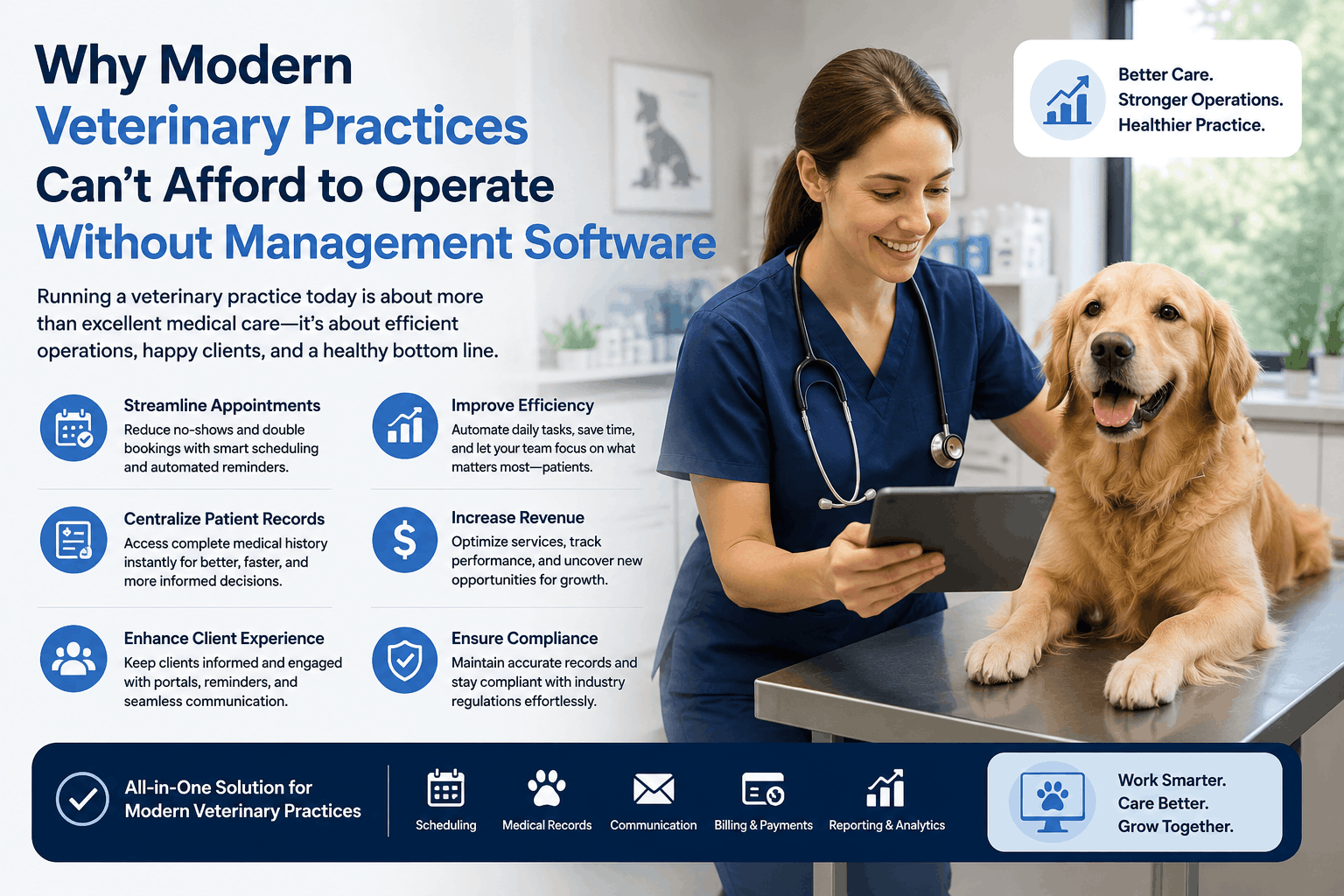
Modern veterinary practices need connected systems, not scattered tools. The right management software reduces admin work, protects revenue, supports staff, and improves patient care.

The veterinary industry across the UK and EU has undergone a seismic shift in the past decade. What once functioned adequately with appointment books and paper records has evolved into a complex operational environment demanding precision in patient care, regulatory compliance, inventory management, and seamless client communication. Yet a surprising number of practices still rely on fragmented systems—or attempt to manage everything through spreadsheets and disconnected tools that create bottlenecks rather than solutions.
This isn't merely an administrative inconvenience. It's a fundamental business risk that directly impacts patient outcomes, staff retention, and your practice's long-term viability. The question facing veterinary professionals today isn't whether to implement vet management software, but rather which system can genuinely address the mounting pressures of modern veterinary practice.
The Real Cost of Fragmented Systems
Visit any busy veterinary practice during peak hours and you'll witness the same scenario: receptionists toggling between multiple screens to find patient records, veterinarians waiting for treatment histories while anxious owners stand by, and nurses manually cross-referencing inventory levels before procedures. These aren't isolated inefficiencies—they're systemic failures that compound throughout the day.
Consider the financial implications alone. A mid-sized practice handling 40-50 appointments daily loses an average of 15-20 minutes per day simply searching for information across disconnected systems. That's nearly two hours of productive time evaporated—time that could be spent on patient care, client consultations, or strategic practice development.
But the hidden costs run deeper:
Compliance vulnerabilities: Manual record-keeping increases the risk of incomplete documentation, creating exposure under GDPR regulations and veterinary practice standards
Inventory waste: Without real-time tracking, practices routinely over-order supplies or face shortages during critical procedures
Revenue leakage: Unbilled services, missed follow-up appointments, and disorganized payment tracking can cost practices thousands annually
Staff burnout: Administrative friction is consistently cited as a primary factor in veterinary staff turnover across Europe
What Veterinary Practices Actually Need From Management Software
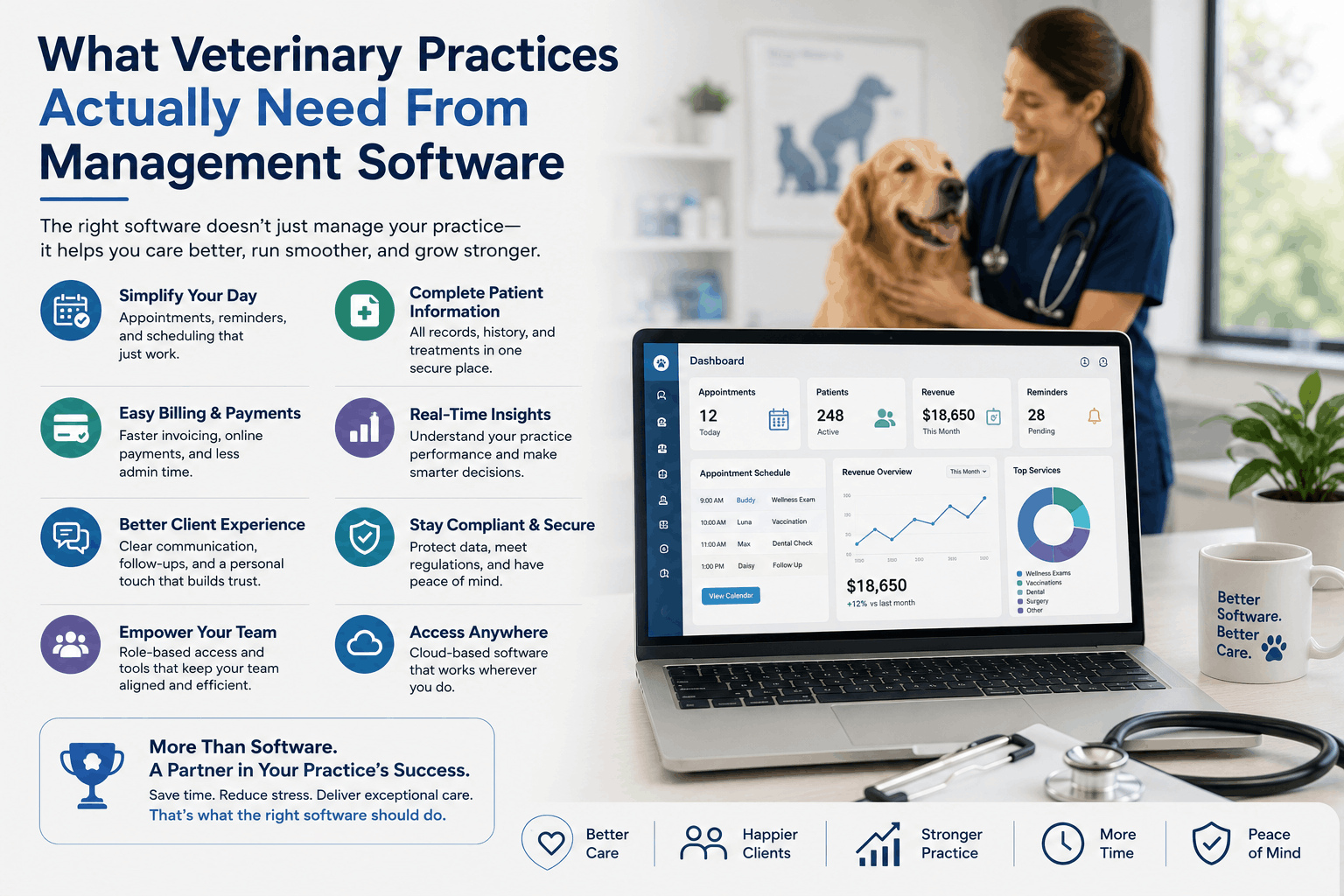
The market offers dozens of practice management solutions, but not all software is created equal. Veterinary professionals in the UK and EU face specific challenges that generic systems simply can't address.
Comprehensive Patient Records That Actually Work
Effective vet management software must function as a complete medical repository, not just a digital filing cabinet. When a patient arrives for a follow-up consultation, veterinarians need instant access to vaccination histories, diagnostic imaging, laboratory results, previous medications, and treatment notes—all within a unified interface.
The system should support:
Multi-species patient profiles with breed-specific health considerations
Integration with diagnostic equipment for seamless data transfer
Clinical decision support that flags potential drug interactions or contraindications
Digital consent forms and treatment plans that clients can review and sign electronically
Practical scenario: A Border Collie presents with acute lethargy. The veterinarian immediately accesses the patient's record, noting a similar episode eight months prior that resolved with dietary modification. Instead of running unnecessary diagnostics, the vet can make an informed clinical decision based on complete historical data—saving the owner expense and the patient unnecessary procedures.
Intelligent Appointment Scheduling
Traditional appointment systems create chaos rather than order. Double bookings, inadequate time allocation for complex procedures, and poor resource management lead to delays that frustrate clients and stress staff.
Modern vet management software should offer:
Automated appointment reminders via SMS and email to reduce no-shows
Procedure-based time blocking that allocates appropriate consultation lengths
Waitlist management that automatically fills cancellations
Multi-location scheduling for practices operating across several sites
Practices implementing intelligent scheduling systems report 25-30% reductions in no-show rates and significant improvements in daily workflow predictability.
Real-Time Inventory Control
Pharmaceutical and supply management represents one of the most challenging operational aspects of veterinary practice. Expired medications, stockouts of essential drugs, and untracked usage patterns create both clinical risks and financial losses.
Effective inventory modules track:
Real-time stock levels with automated reorder triggers
Batch numbers and expiration dates for pharmaceutical compliance
Usage patterns tied to specific procedures or conditions
Supplier integration for streamlined ordering
Example scenario: During a routine spay procedure, the system alerts staff that suture inventory has dropped below the reorder threshold. An automatic purchase order is generated, ensuring supplies arrive before the next scheduled surgery day. This prevents last-minute ordering at premium prices or, worse, procedure postponements.
Financial Management That Closes Revenue Gaps
Many practices lose significant revenue not through low client volume, but through incomplete billing and poor financial tracking. Services rendered but not invoiced, payment plans without follow-up, and unclear pricing structures all contribute to revenue leakage.
Comprehensive financial tools should include:
Itemized invoicing that automatically pulls from treatment records
Payment plan management with automated reminder systems
Insurance claim processing with direct integration to UK and EU pet insurance providers
Financial reporting that highlights revenue trends, outstanding balances, and profitability by service type
Practices that transition from manual billing to integrated financial management typically recover 8-12% in previously unbilled services within the first quarter.
Addressing Compliance and Data Security
Veterinary practices in the UK and EU operate under strict data protection regulations. GDPR compliance isn't optional, and the penalties for data breaches can be devastating for small and medium practices.
Quality vet management software must provide:
Encrypted data storage with regular automated backups
Role-based access controls that limit staff visibility to relevant information
Audit trails documenting who accessed what information and when
Secure client portals that allow owners to view records without compromising system integrity
Beyond regulatory compliance, data security builds client trust. Pet owners increasingly expect the same digital sophistication from their veterinary practice as they receive from their own healthcare providers.
Client Communication in the Digital Age
The relationship between veterinary practices and pet owners has evolved. Clients expect convenient appointment booking, digital payment options, and proactive communication about their pet's health needs.
Modern practices use their management software to:
Send automated vaccination reminders and wellness check prompts
Deliver post-procedure care instructions via email or SMS
Provide online booking portals that reduce phone volume
Share diagnostic results and treatment plans through secure client access
Real-world application: A practice notices declining compliance with annual wellness examinations. They configure their system to send personalized reminders 30 days before each patient's annual exam is due, including a direct booking link. Within three months, wellness exam attendance increases by 40%, catching health issues earlier and generating additional revenue.
The Integration Advantage
Veterinary practices don't operate in isolation. They interact with laboratories, diagnostic imaging centers, specialist referral hospitals, and pharmaceutical suppliers. Vet management software that integrates with these external systems eliminates duplicate data entry and reduces error rates.
Key integrations include:
Laboratory interfaces that import results directly into patient records
Digital radiography systems that attach images to consultations
Pharmacy and supplier databases for simplified ordering
Accounting software to streamline financial management
Each integration point eliminates a manual task, freeing staff to focus on patient care rather than administrative coordination.
Making the Transition: Implementation Considerations
Adopting new practice management software represents a significant investment of time, money, and organizational energy. Successful implementations share common characteristics:
Comprehensive staff training: Every team member must understand not just how to use the system, but why specific workflows matter
Phased rollout: Implementing all features simultaneously overwhelms staff; successful practices activate modules progressively
Data migration planning: Historical records must transfer accurately to maintain continuity of care
Ongoing support: Software providers should offer responsive technical support during and after implementation
The transition period typically spans 4-8 weeks, with most practices achieving full operational efficiency within three months.
The Competitive Reality
Veterinary medicine has become increasingly competitive across the UK and EU. Corporate groups with sophisticated operational systems are expanding rapidly, while independent practices struggle to match their efficiency and client experience.
This isn't about size—it's about systems. A well-organized independent practice with robust vet management software can deliver superior patient care and client service compared to a larger practice still operating on outdated systems.
The practices thriving in today's environment share a commitment to operational excellence enabled by technology. They've recognized that investing in proper management infrastructure isn't a luxury—it's essential for survival.
Streamlining Your Practice Operations
The challenges facing modern veterinary practices won't diminish. Regulatory requirements will increase, client expectations will continue rising, and competition will intensify. Practices that embrace comprehensive management software position themselves not just to survive these pressures, but to thrive despite them.
The transformation from chaotic, fragmented operations to streamlined, efficient practice management delivers measurable results: improved patient outcomes, reduced staff stress, enhanced client satisfaction, and stronger financial performance.
You can use Veterian to automate this entire process. From intelligent scheduling and comprehensive patient records to inventory management and client communication, the right system transforms how your practice operates—allowing you to focus on what matters most: exceptional patient care and building lasting relationships with the pet owners who trust you with their companions' health.
The question isn't whether your practice needs modern management software. The question is how much longer you can afford to operate without it.