Missed Charges in a Veterinary Practice: Where They Happen and How to Find Them
Missed charges can slip between patient care and checkout. Discover where veterinary billing errors happen and how a simple 10-visit audit can help your clinic improve invoice accuracy.

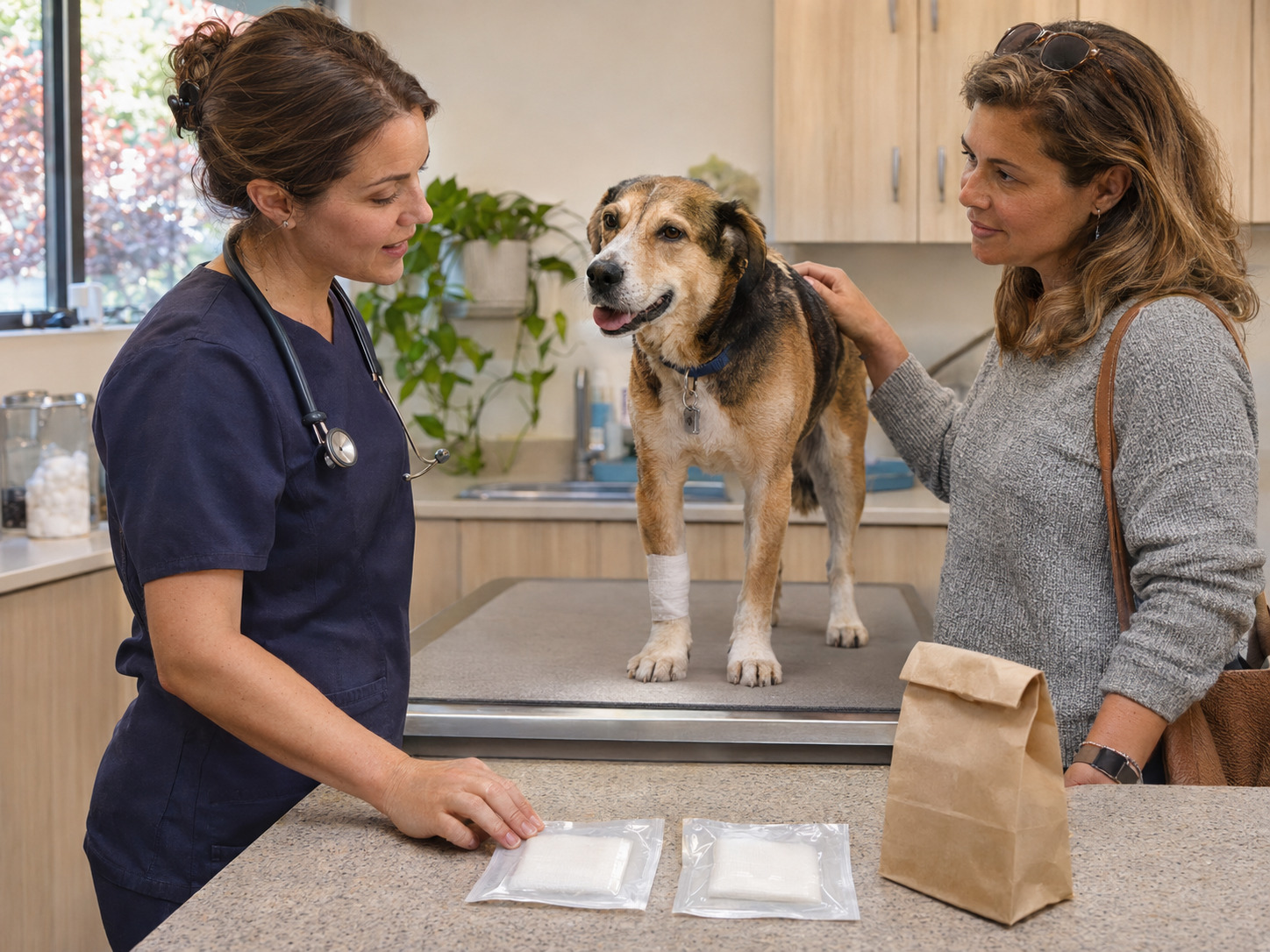
Take a routine wound check. The dressing needs changing, and the owner would like a couple of spares for home. The vet puts two in a bag, explains when to use them and mentions them in the notes. At the desk, the owner pays for the recheck. It’s only later, when someone reads the notes alongside the invoice, that the two dressings come into question.
It would be easy to count them as a missed charge. In this hypothetical visit, though, that depends on what the recheck fee covered and what the vet told the owner. Perhaps all the materials were included. Perhaps the vet offered the spares as a courtesy. Or perhaps the clinic charges for take-home dressings and nobody told reception that two had gone home.
The invoice looks exactly the same in all three cases. Correcting it on the strength of the clinical notes alone could introduce an error where there wasn’t one. Leaving it alone could mean the practice absorbs the cost of something it intended to bill for. Either way, someone now has to interrupt the vet to settle a question that was much easier to answer yesterday.
Where Veterinary Charges Get Missed
A missed charge occurs when a practice provides a treatment, product or service it intended to bill for but leaves it off the invoice or bills for too little. A deliberately waived fee and an item covered by a package both reflect pricing decisions. An unpaid invoice raises a different question: the charge is on the bill, but the balance is still due.
An appointment is booked as an ear recheck. During the examination, the owner agrees to ear cytology. The vet does the test, discusses the result and records it in the patient’s notes. At reception, the appointment still says “ear recheck”. If that’s what the receptionist uses to prepare the bill, the extra work is easy to miss. The clinical record can be perfectly good while the invoice is incomplete.
An October 2025 audit of billing records from fiscal year 2023 at the UC Davis veterinary teaching hospital found that, in 31,965 of 106,615 encounters reviewed, staff entered additional charges after the initial invoice had closed. Auditors found that the use of billing sheets varied between services. When charges came in late, the hospital had to send clients another invoice for the same encounter. Those figures describe late entries at one hospital. They don’t establish how much revenue was lost, there or elsewhere. For a practice manager, the more useful finding is how much depended on getting information from the people providing care to the people preparing the bill. UC Davis veterinary revenue audit
What was ordered, what was given and what went home
Medicines illustrate why the check needs to work in both directions. A treatment order might call for three administrations, while the nursing record shows that two were given and the third was withheld. Billing from the order could put all three on the invoice. Billing from a discharge summary that mentions only the take-home medication could leave both administrations off. The administration record settles what was given. The clinic’s fee policy settles whether those doses carry a separate charge.
Supplies can be trickier because the team may agree about everything except what the fee covers. A bandage fee might cover the materials used in the room and exclude those sent home. A few words in the service description can save considerable discussion at the desk: “Includes the dressing applied in the clinic. Take-home dressings are charged individually.” That also helps a new colleague recognise when adding a dressing would charge the owner twice.
On the ward, the missing detail may be a time. A patient can come off a fluid pump in the afternoon and stay overnight for observation. Where pump use is charged by duration, the discharge time won’t tell reception when to stop the clock. The person disconnecting the pump has that information to hand. By the following morning, finding it may involve two shifts and a search through the nursing notes.
There’s also a billing problem that has little to do with the contents of the invoice. A question about food or medication holds up checkout, the patient goes home and the draft stays open after the shift changes. Every line might be correct. The next step is to resolve the question and issue the invoice.

How to Find Missed Charges: Audit 10 Veterinary Visits
In its December 2025 survey on medical record and invoice auditing, the Veterinary Hospital Managers Association received 126 responses to its question about audit challenges. Lack of time was the most common theme. Respondents also described incomplete or delayed notes, missed add-on services and the difficulty of fitting a review around other work. A manager weighing up whether to start an audit might reasonably recognise their own week in those answers. VHMA medical record and invoice auditing survey
Ten visits are enough to start a useful conversation. Choose them from a recent week’s completed visits. Pulling ten paid invoices would quietly exclude the patients whose bills were never issued. One workable mix is four consultations, two nurse or technician visits, two procedures and two inpatient discharges. Substitute day cases if you don’t have a ward. Take the first eligible visits in each group, count each visit once and make a note of the mix so you can repeat the exercise.
Read the clinical, treatment and dispensing records before opening the bill. The wording matters. “Two spare dressings supplied” establishes that something went home. “Spare dressings discussed” leaves that open. Look for completed work, quantities supplied and any conversation about fees. A plan for a test at the next appointment doesn’t belong on today’s invoice.
Then open the invoice and match the entries. Some care will appear under its own name, some under a package. Check the units, especially for medicines sold by the pack or tablet. Look for a second invoice linked to the visit before recording an omission. Finally, read back from the bill to the record. This is where you may spot a duplicate dressing charge or a dose that was ordered and withheld.
A short record of what you found
Here’s one possible outcome for the wound check. Before counting the missing line as a missed charge, the manager checks what the recheck fee covered and whether the vet waived the charge for the spares. In this hypothetical example, the agreed fee covered the dressing applied in the clinic. The two take-home dressings were priced separately, and the vet hadn’t waived the charge.
Visit | Care recorded | Invoice | Finding | Action |
|---|---|---|---|---|
Wound recheck (illustrative) | Two spare dressings supplied | Recheck fee only, issued and paid | Two dressings omitted | Manager confirmed the agreed fee. Practice honoured the settled bill and added take-home quantities to the checkout handover. |
Visit reference | Treatments, products and quantities | Invoice items, quantities and status | Matched, missing, waived, included, possible overcharge or unclear | Responsible person and follow-up |
Copy the last row for each of your ten visits. A waived fee or a package inclusion is a resolved finding. If the evidence is unclear, record the question and leave the amount open. A note that says “discussed” is too little to justify sending a client a bill.
What matters after ten visits is whether the same difficulty crops up again. Three queries about take-home supplies point to a discharge process worth looking at. They give you little basis for estimating a year’s lost income, but they tell you exactly which colleagues to bring into the discussion.
Give reception a question it can answer
By the time an owner reaches the desk, the receptionist may be answering the phone and checking in the next patient. Reading several paragraphs of clinical notes to work out what went into a discharge bag is a poor use of that time. The person packing the bag can record the quantity where reception prepares the invoice. The vet who agrees to waive a fee can leave a short note there too. How veterinary reception teams can reduce administrative work
“Recheck fee waived as agreed with owner” and “Recheck included in surgical fee” both give reception a clear answer. They also preserve a distinction the practice manager will want later. One records a clinician’s deliberate decision to offer complimentary care. The other records a service the owner has already paid for.
Some discrepancies will survive a busy checkout. Give one person on the closing shift responsibility for matching departures to issued invoices and handing over anything still open. When an invoice is waiting on a clinical detail, record what needs checking and who will follow it up. If the stop time for a fluid pump is unclear, the manager can ask the nurse responsible to confirm it before the invoice is issued, then record the outcome. A possible overcharge deserves that follow-up even if the owner has already paid. Where care cannot be confirmed, the manager can close the finding as unverified and address the gap in the record.
At the next team meeting, bring one example and ask the people involved what would have made the answer clear before the owner left. Try their suggestion, then look at ten comparable visits the following month. For the wound check, the test is simple enough: when two dressings go home, can the colleague at the desk see how many the owner received and what the vet agreed? That’s a useful improvement whether the right charge is two dressings or none.
How Veterian can help
In Veterian, staff can record the quantity of a medication, product or service on the visit and choose whether it goes on the draft invoice. The invoice switch starts on for products and services and off for medications. For an injection the clinic bills separately, the person recording it can make that choice while the details are fresh. Record a treatment
At checkout, staff can review recorded services and products that haven’t been invoiced and clarify whether they were included, waived or missed. Staff review and issue the invoice themselves. If they complete the visit while the invoice is still a draft, it stays open until someone issues it. Create and issue an invoice · Record and complete a visit
Want to bring clinical records, treatments and invoicing into one workflow? Apply for a 14-day free trial of Veterian.